Created alongside Emily Villett for Lighthouse Labs’ full-time web development bootcamp final project.
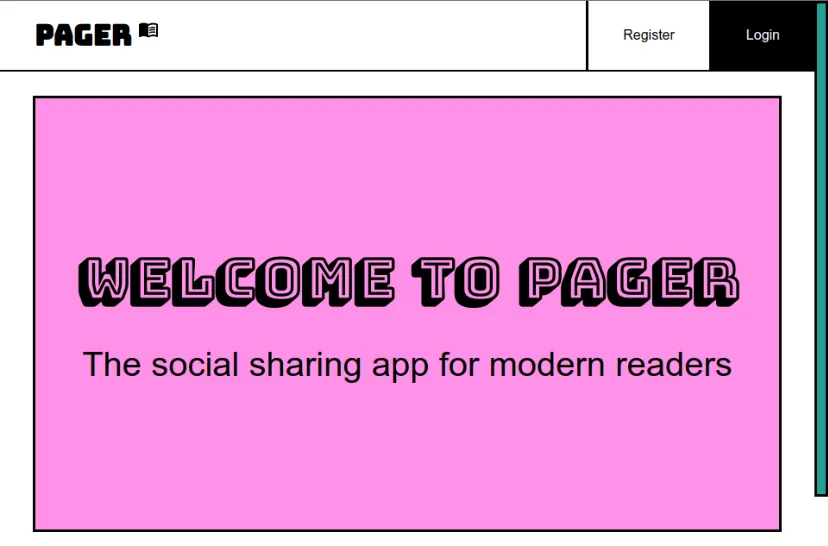
Project Overview:
Pager is a simple, user-driven social media platform designed for readers to collect, review, and curate lists of their favourite books.
Objectives
- Pare down the bloated features provided by other major book review sites to offer a clean, focused application.
- Follow a clear design-guide with an opinionated style to simulate collaboration with a UI/UX team.
- Allow users to log their own books in a persistent database and curate public lists.
Features
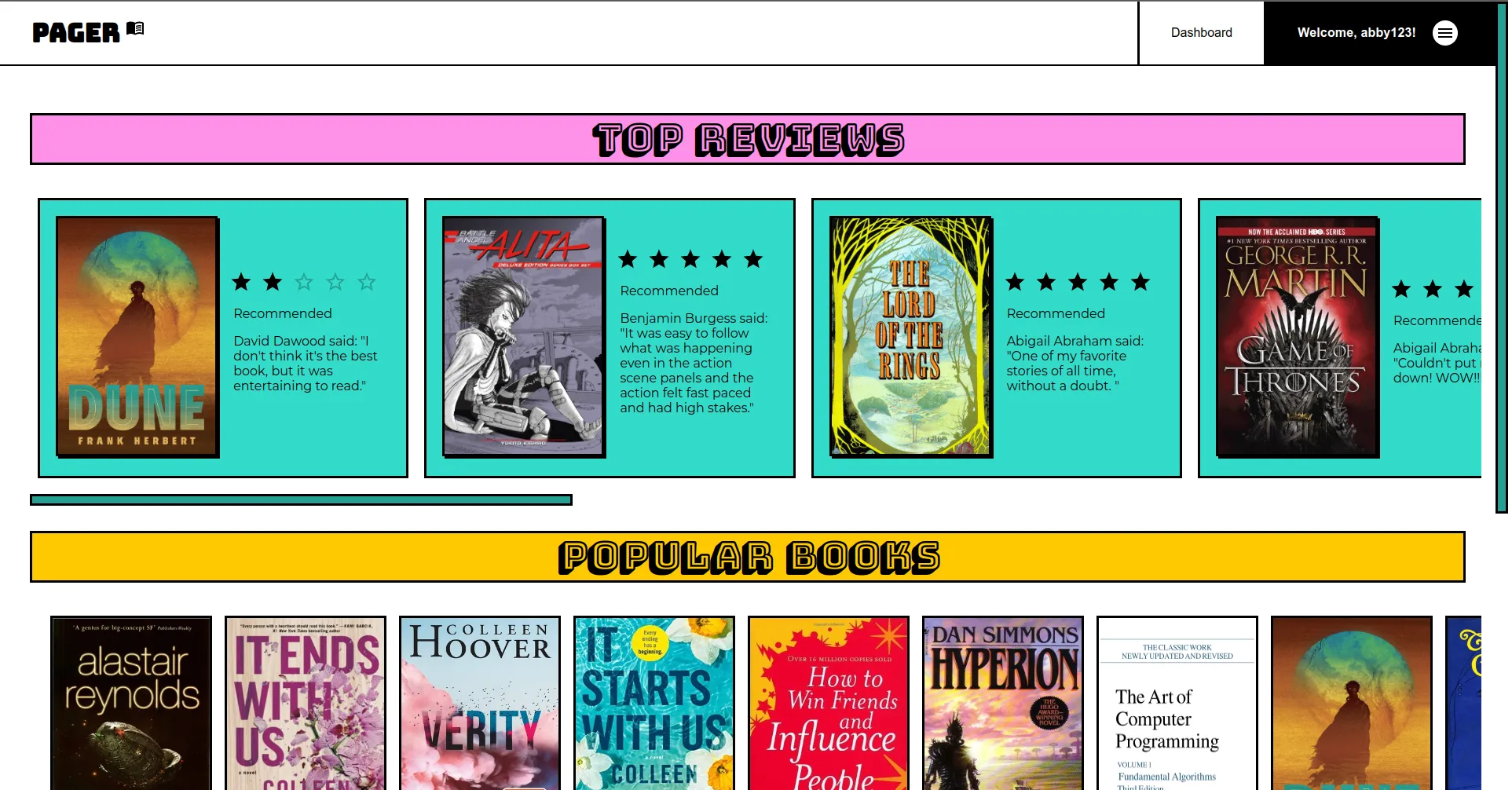
- A Social App for Book Lovers:
- See reviews from other users, sorted by total likes across the application.
- Who’s reading what? Explore a list of popular books from other readers.
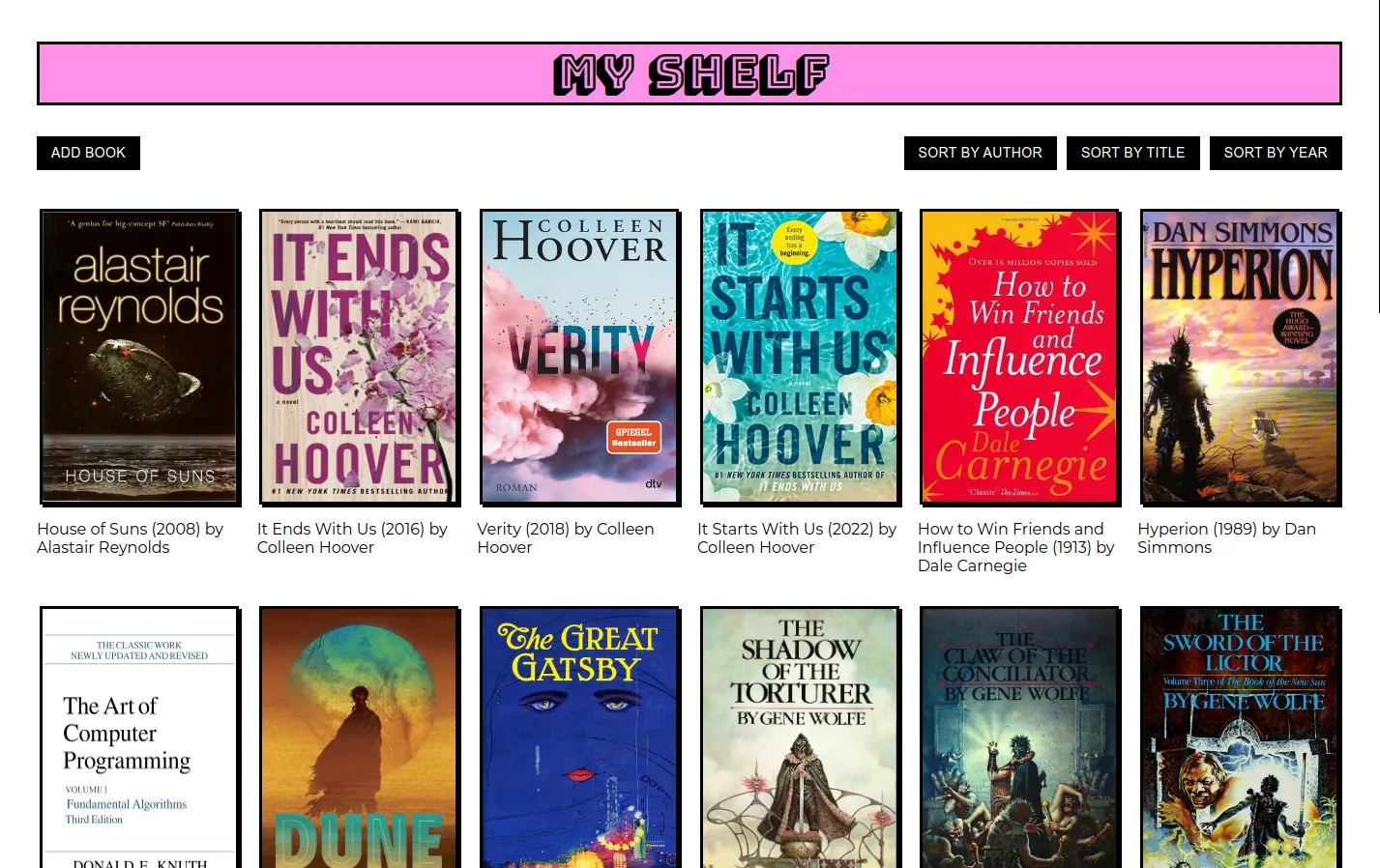
- Your Shelf, Your Way:
- Users can populate their shelves with books they’ve read or want to read.
- Sort by author, title, or year to find your books ASAP.
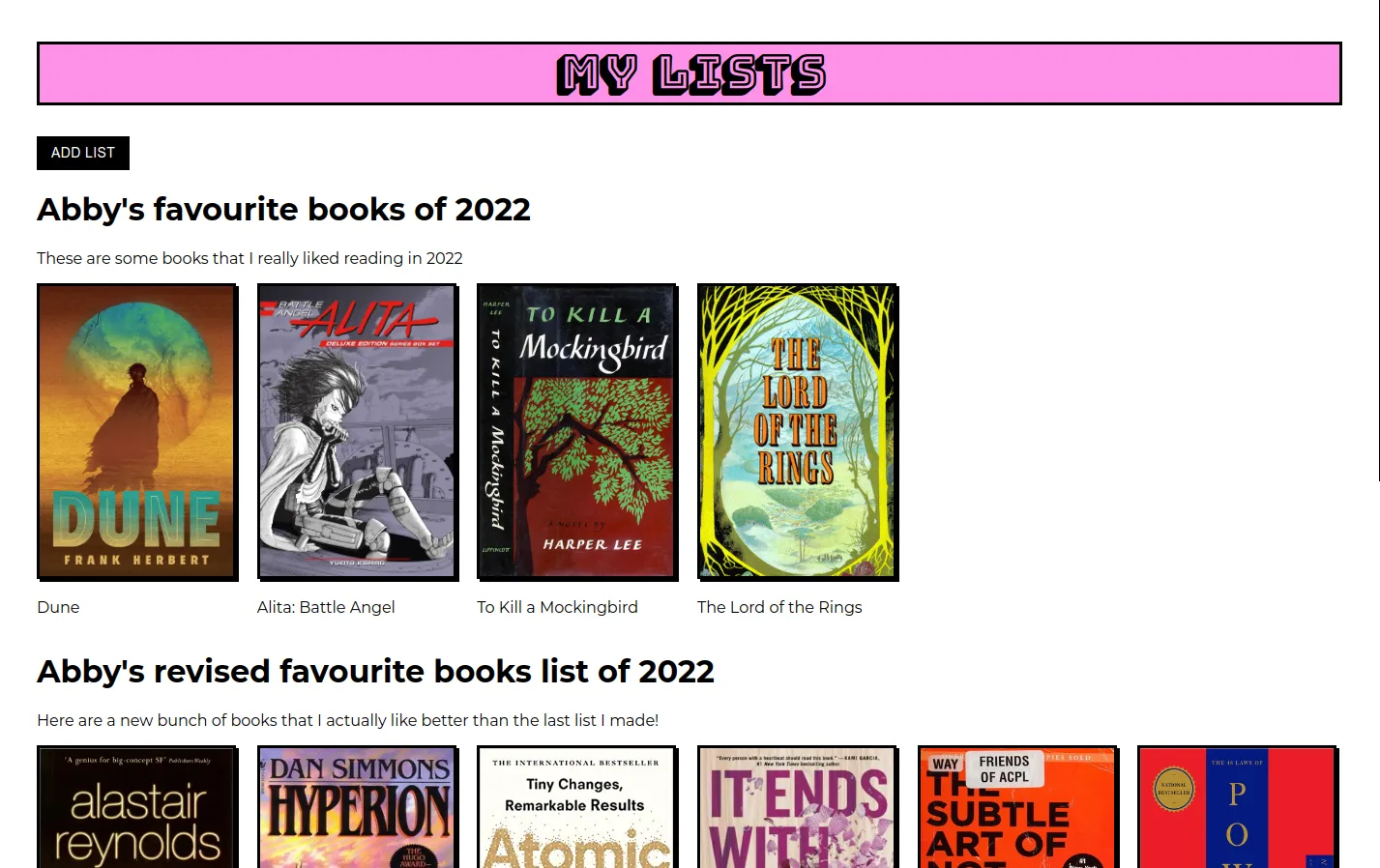
- Lists for Recommendations and Categorization:
- Create dynamic lists of books that are visible by others on the application.
- A simplified way to share your favourites with your friends and followers!
Technology Stack
- Frontend: React combined with Material UI for snappy, reusable components.
- Backend: Express for routing and quick presentation of data.
- Database: PostgreSQL presented through the partnered Pager API
Outcome
Pager was an interesting project to develop, as Emily and I both felt comfortable working in vanilla React and Express but challenged ourselves by implementing Material UI components. We tried to follow “neubrutalism” (see a good rundown here) and its design principals as closely as possible, and found that using a component library like Material UI was perfect for most of the heavy lifting.
If I were to go back to this project I would work on improving the colour-scheme and make fonts more consistent to the design guide across the application. This was a great challenge to flex our design implementation muscles, but more time could be spent on the design itself.