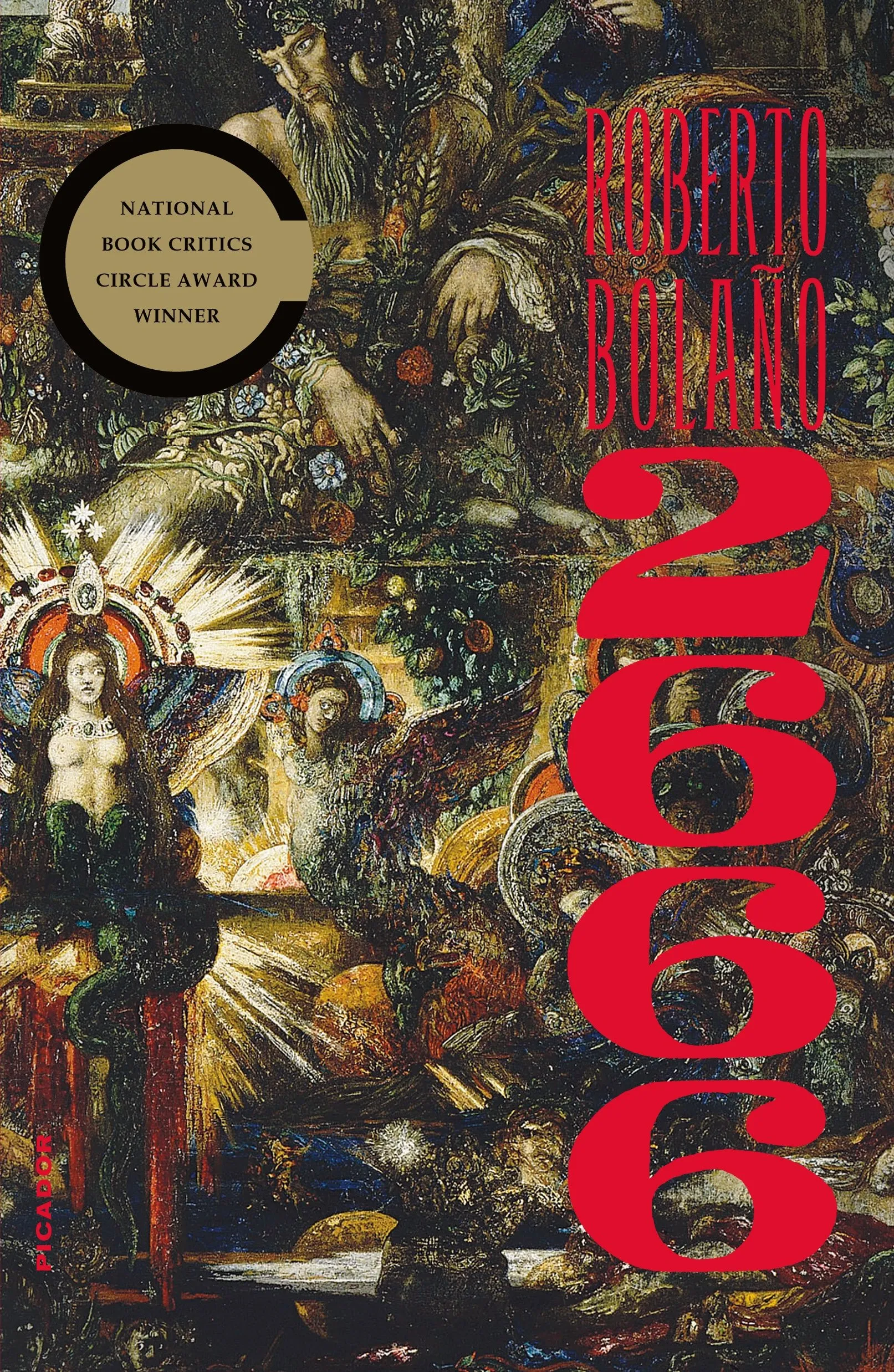
I truly feel that 2666 is brilliant and far less “nebulous” than many of the reviews I’ve read make it out to be.
I’ve struggled to resonate with much that I’ve seen written about the book, specifically in regards to the book’s “hidden center” that is referenced in the first edition’s notes. Reflecting on each of the five parts of 2666 brings me back, again and again, to the theme of sacrifice. What place does sacrifice—personal, societal, corporal, ritual—continue to hold in our society? Bolaño repeatedly centers the book on this theme and uses it as an investigation into our desperate search for meaning.
Spoilers for the entire novel
2666 meditates on how victims are used as unwilling sacrifices in the vain pursuit of understanding. Amalfitano’s book is a perfect foil to the disappearances of young women in Santa Teresa as it hangs outside, page after page being torn from its binding to reveal a hidden “truth”. Femicides in the fictional northern Mexican city (based on real events in Ciudad Juárez) are halfheartedly investigated by its local police as they idly wait for an explanation for the murders. It can’t be a symptom of the machismo and misogyny that rampages through the city. It must be a serial killer. Some perfect, idealized, alien “monster” that commits these crimes. In the pursuit of an explanation, more and more victims surface as the police hold the unspoken hope that the next body will reveal everything, once and for all. I believe that Amalfitano’s sudden push to send Rosa away is born of his reflection on the book outside his window; young women are being torn away from the city to reveal a truth that has been reachable the entire time.
The Part About Archimboldi lands this point squarely with the passages on Reiter’s experience as a Nazi soldier in World War II. The reflection on Dracula and his Transylvanian castle points to this idealized “killer” who commits violent crimes against mankind, as if only an otherworldly, inhuman monster could be capable of doing such a thing. Contrast this with the soon-to-follow passages of a German administrator sending ten-year-old boys to gun down hundreds of Jewish prisoners in a forest. He claims that he couldn’t have done the killing himself, as it “isn’t in [his] nature”.
We encounter sacrifice as early as The Part About the Critics, where the four academics track down an artist who has severed his own hand from his body to be displayed as one of his greatest works. What could it possibly signify? Patrons of the arts are enthralled by the piece, fascinated by what could compel the artist to make such a statement. The sacrifice, according to the artist, was plainly for money. Later on in the novel, an old man soliloquizes about the sacrifice of “minor” authors:
Every work that isn’t a masterpiece is, in a sense, a part of a vast camouflage… Every book that isn’t a masterpiece is cannon fodder, a slogging foot soldier, a piece to be sacrificed…
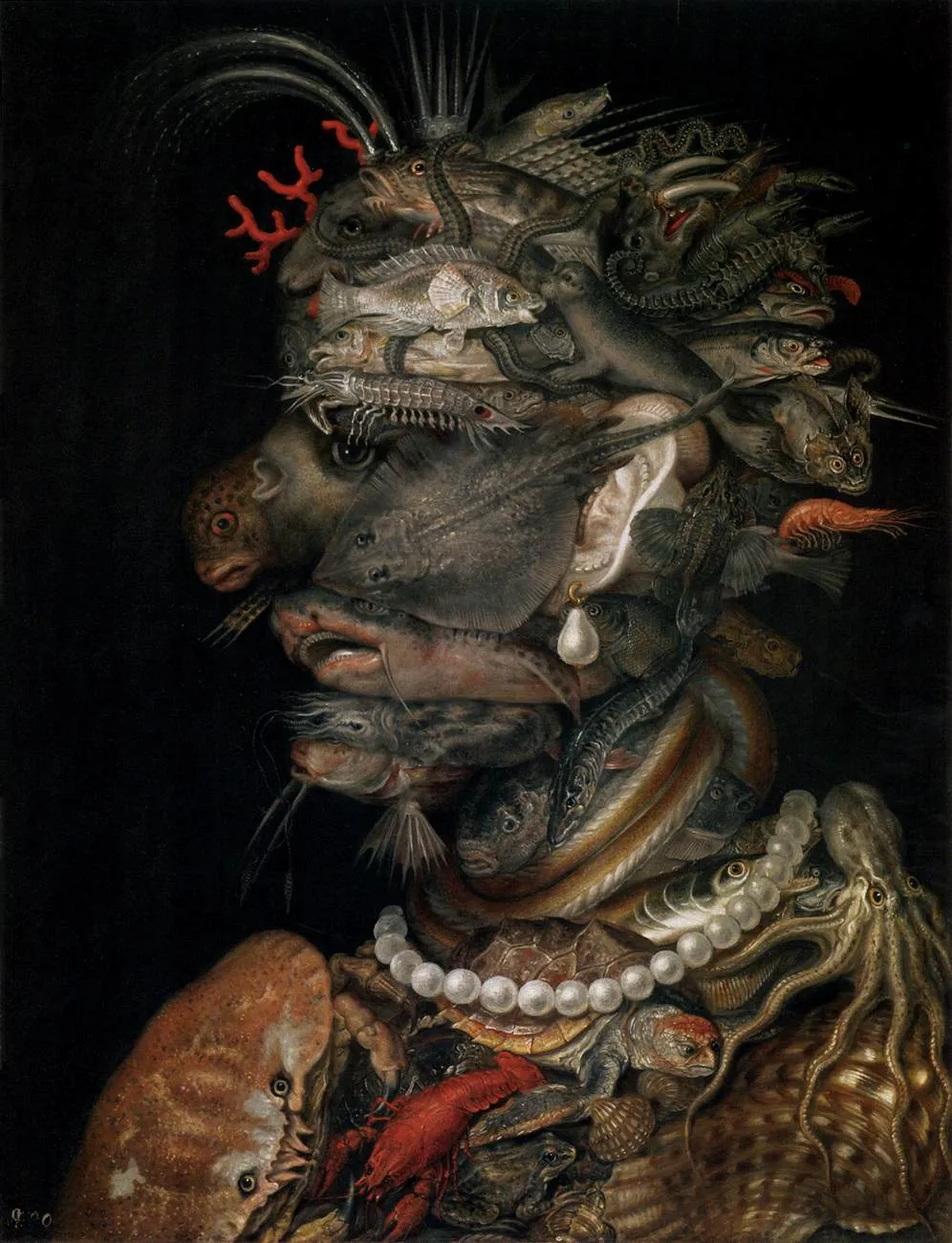
The man claims that books that are not “masterpieces” serve as a shield from “the book that really matters”. Bolaño is elevating the theme of sacrifice to a meta-narrative on the book itself: whether the act of writing is actually an act of sacrifice in search of true meaning. Reiter’s chosen name, Archimboldi, is a reference itself to an artist whose fame came from the portrayal of figures built up of smaller, independent pieces.
Lalo Cura’s position as a bodyguard for a narco’s wife makes him the unwitting victim of a sacrifice; an assassination attempt on his client sees the other, more corrupt bodyguards walk away, leaving him to die alongside her. In another instance, local gang members are rounded up and placed in Santa Teresa’s prison as an answer to the femicides. Here they are ritually tortured and killed by their fellow inmates while the prison guards film from above, hoping to sell the footage as snuff. A vicious cycle of sacrifice plagues the city, especially at the levels of society’s most desperate.
Ingeborg’s first encounter with Reiter has her make him swear “by the Aztecs” that he’ll remember her name forever. She describes the ritual slaughter of sacrifices atop Aztec pyramids on plinths of obsidian, and how the blood seeping across the transparent surface of the stone would taint the light within the pyramids “a very bright red and a very bright black”. She suggests that the significance of this “exists outside time, or in some other time, ruled by other laws”, suggesting that this ritual will persist and pervade society throughout time. I found this to be my clearest connection with the book’s title, 2666, especially in light of the title’s connection to Amulet, where Auxilio Lacouture claims:
Guerrero, at that time of night, is more like a cemetery than an avenue, not a cemetery in 1974, or in 1968, or 1975, but a cemetery in the year 2666, a forgotten cemetery under the eyelid of a corpse or an unborn child, bathed in the dispassionate fluids of an eye that tried so hard to forget one particular thing that it ended up forgetting everything else.
This, I think, is the book’s “hidden center”. It’s not a buried key that unlocks the novel, but the recognition that there is no key at all. The police waiting on the next body, the academics chasing Archimboldi, the patrons interrogating a severed hand, the reader straining for a unifying truth: each performs the same ritual, offering up victims in exchange for an explanation that never arrives. Bolaño’s devastating suggestion is that the search itself is the engine of the sacrifice. We tell ourselves the violence must mean something. It must be the work of a monster, a serial killer, a fate “outside time”, because the alternative (that it is ordinary and ours), is unbearable.
What makes 2666 feel less nebulous to me than its reputation suggests is precisely this coherence. The five parts are not five riddles but five angles on a single observation about how we live alongside atrocity. The novel refuses the consolation it knows we want. That refusal is not a failure of meaning. It is the meaning.